
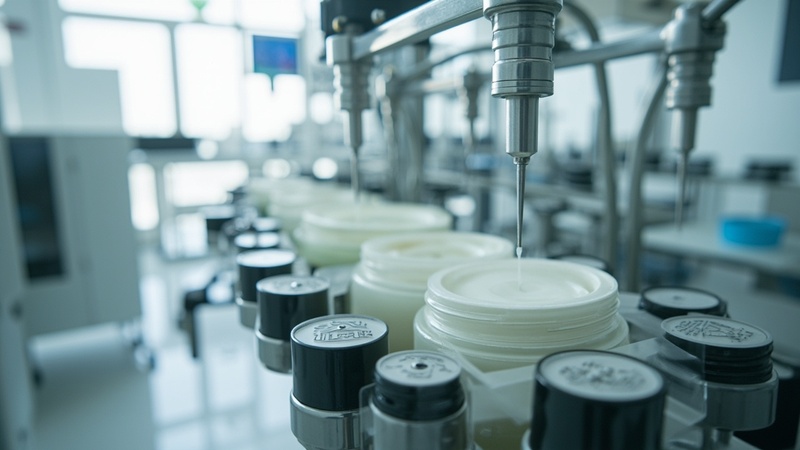
Cosmetic Packaging Machine Selection: Meeting Beauty Industry Standards

Operations & Setup

Introduction

The global cosmetics industry represents a $570 billion market that demands packaging solutions balancing aesthetic appeal, product protection, and production efficiency. From luxury skincare serums to mass-market lipsticks, cosmetic packaging requires specialized machinery that addresses unique challenges in product handling, contamination prevention, and brand presentation.

Start with our complete cosmetic packaging solutions overview for industry context.

Based on our experience supplying packaging solutions to cosmetics manufacturers worldwide—including partnerships with major beauty brands in Asia, Europe, and North America—this comprehensive guide will help you select the right packaging machinery for your cosmetic products. You’ll discover industry-specific requirements, key machine features, and practical strategies for optimizing your production line.

Key Takeaway: Cosmetic packaging isn’t merely functional—it’s a critical component of brand experience. Selecting machinery that delivers both production efficiency and premium presentation can significantly impact your brand perception and market success.

What Is the Beauty Industry Packaging Landscape and Why Does It Matter?

Market Overview and Trends

The cosmetics packaging market continues evolving with consumer preferences and regulatory requirements:

Global Cosmetics Market Statistics:

Region Market Value (2025) Growth Rate Key Segments
North America $95 billion 4.2% CAGR Skincare, wellness
Europe $110 billion 3.5% CAGR Luxury, sustainability
Asia Pacific $175 billion 6.8% CAGR Skincare, K-beauty influence
Latin America $35 billion 5.2% CAGR Color cosmetics, mass market
Middle East $25 billion 6.5% CAGR Premium, luxury

Key Industry Trends:

  1. Sustainability Focus: 73% of consumers prefer sustainable packaging (McKinsey 2025)
  2. Clean Beauty Movement: Demand for minimal, natural formulations
  3. E-commerce Packaging: Protection during shipping while maintaining aesthetics
  4. Smart Packaging: QR codes, NFC tags, and authentication features
  5. Customization: Personalization and small-batch production capabilities

Product Categories and Packaging Requirements

Major Cosmetic Categories:

Category Products Packaging Formats Key Requirements
Skincare Creams, lotions, serums Bottles, tubes, pouches Preservation, dosing accuracy
Color Cosmetics Lipstick, foundation, mascara Containers, compacts, tubes Aesthetic appeal, precision
Haircare Shampoo, conditioner, styling Bottles, pouches, sachets Volume accuracy, closure
Fragrance Perfumes, body sprays Bottles, vials Airtight sealing, luxury feel
Sun Care SPF products Tubes, bottles, spray cans UV protection, stability

Regulatory Framework for Cosmetic Packaging

Global Regulatory Requirements:

Region Authority Key Standards Focus Areas
USA FDA FD&C Act, MoCRA 2022 Safety, labeling, allergen disclosure
EU EC Cosmetics Regulation 1223/2009 Product safety, responsible person
UK MHRA UK Cosmetics Regulation EU alignment, GB-specific requirements
Japan MHLW Pharmaceutical and Medical Device Act Quasi-drug classification
China NMPA Cosmetics Regulations Animal testing alternatives, safety

Critical Compliance Areas:

  • Material Safety: Packaging must not leach harmful substances
  • Preservation: Maintain product integrity throughout shelf life
  • Labeling: Language, ingredient disclosure, claims substantiation
  • Allergen Declaration: Fragrance allergens must be identified
  • Sustainability: Emerging regulations on recyclability and materials

What Are the Key Factors in Cosmetic Packaging Machine Selection?

Product Handling Considerations

Cosmetics require specialized handling due to their formulation characteristics:

Common Product Characteristics:

  1. Viscosity Variations: From watery serums to thick creams
  2. Temperature Sensitivity: Heat-sensitive active ingredients
  3. Abrasive Ingredients: Physical exfoliants may damage equipment
  4. pH Sensitivity: Acidic or alkaline formulations may affect materials
  5. Fragrance Complexity: Aromatic compounds require sealed systems

Equipment Material Requirements:

Product Type Recommended Materials Avoid
Aqueous products 304/316 stainless steel, HDPE Reactive metals, ABS
Oil-based products 316 stainless steel, PP Certain plastics, copper
Abrasive formulations Ceramic components, hardened surfaces Standard stainless steel
pH-sensitive products Glass, PFTE-lined surfaces Aluminum, zinc

Packaging Format Requirements

Flow Wrapper Applications for Cosmetics:

Format Products Machine Requirements
Single-dose sachets Face masks, serums Precision dosing, film registration
Multi-packs Wipes, cotton pads Counting, collating
Sample units Fragrance, foundation High speed, film quality
Multi-product bundles Gift sets, kits Variable infeed, mixed products

Production Speed Requirements

Machine Speed Classifications:

Production Scale Speed Range Machine Class Investment Range
Artisanal 5-30 units/min Entry-level $25,000-50,000
Small batch 30-80 units/min Mid-range $50,000-120,000
Medium scale 80-200 units/min Production $120,000-250,000
High volume 200-600 units/min High-speed $250,000-500,000+

Flexibility and Changeover Requirements

Modern cosmetics production requires flexibility:

Changeover Considerations:

  1. Quick-change parts: Tool-free adjustment capability
  2. Recipe storage: HMI-based parameter memory
  3. Film compatibility: Multiple film types support
  4. Format flexibility: Multiple package sizes on single machine
  5. Modular design: Easy reconfiguration for new products

How Do You Handle Machine Types for Cosmetic Applications?

Horizontal Flow Wrappers

Flow wrappers provide versatile solutions for many cosmetic products:

Ideal Applications:
– Individually wrapped cosmetics (soaps, masks)
– Multi-pack arrangements
– Sample and travel-size products
– Bundled gift sets

Key Features for Cosmetics:

Feature Purpose Benefits
Precise temperature control Seal integrity without product damage Consistent quality, reduced waste
Servo-driven film transport Accurate film registration Premium appearance, barcode placement
Gentle product handling Protect fragile cosmetics Reduced damage, brand protection
Premium film options High-gloss, metallic, specialty films Brand differentiation
Anti-static systems Prevent powder attraction Clean operation, quality appearance

Tube Filling Machines

For tube-based cosmetics packaging:

Applications:
– Facial creams and moisturizers
– Hair styling products
– Toothpaste and oral care
– Cosmetic creams

Machine Requirements:

Requirement Specification Industry Standard
Dosing accuracy ±1% ISO 534
Tube sealing Clean, consistent folds Visual inspection
Material compatibility ABL, PBL, plastic tubes Product testing
Production speed 30-120 tubes/min Based on scale

Bottle Filling Systems

For liquid and semi-solid cosmetics:

Filling Technologies:

Technology Products Accuracy Speed
Gravity filling Thin liquids, water-based ±2-3% High
Piston filling Creams, lotions, gels ±0.5-1% Medium
Pump filling Viscous products ±1-2% Medium
Overflow filling Level-fill bottles ±1% Medium

Primary vs. Secondary Packaging

Primary Packaging: Direct product contact
– Containers, tubes, bottles
– Seals and closures
– Dispensing systems

Secondary Packaging: Grouping and protection
– Cartons and boxes
– Shrink wrapping
– Bundling
– Display units

Flow Wrapper Role in Secondary Packaging:
– Multi-packs and bundles
– Promotional packaging
– Display-ready configurations
– Eco-friendly paper packaging

What Cosmetic-Specific Machine Features Matter Most?

Product Protection Features

Maintaining Product Integrity:

Related: Food Packaging Machine Selection Guide: Complete

  1. Temperature Control:
  2. Cool-seal technology for heat-sensitive products
  3. Product contact cooling systems
  4. Ambient temperature operation options

    Related: Industrial-Grade Packaging Equipment: A Buyer’s Guide

  5. Contamination Prevention:

  6. HEPA filtration options
  7. Positive pressure enclosures
  8. UV sterilization for film
  9. Anti-microbial surface treatments

  10. Moisture and Oxygen Barrier:

  11. High-barrier film compatibility
  12. Modified atmosphere capability
  13. Desiccant integration options
  14. Induction sealing for jars

Visual Quality Features

Cosmetics demand premium presentation:

Quality Assurance Systems:

System Function Benefit
Vision inspection Seal quality, label placement Zero defect shipping
Color sensing Film and label verification Brand consistency
Barcode scanning Data matrix, QR codes Traceability, consumer engagement
Metal detection Foreign body prevention Product safety
Checkweighing Fill weight verification Compliance, waste reduction

Hygienic Design Standards

Sanitary Construction Requirements:

  • Frame Material: 304 or 316 stainless steel
  • Surface Finish: Ra < 0.8 μm for product contact areas
  • IP Rating: IP65 or higher for washdown areas
  • Drainage: Self-draining designs
  • Seals: Food-grade silicone or EPDM

Cleaning and Maintenance:

  • CIP (Clean-in-Place) capability where applicable
  • Tool-free disassembly
  • Corrosion-resistant materials
  • Easy access for manual cleaning
  • Maintenance-free bearing options

Premium Surface Options

For luxury cosmetics:

Premium Finish Options:

  1. Mirror Polish: High-gloss finish for premium appearance
  2. Brushed Finish: Subtle texture for brand differentiation
  3. Color Coding: Product-specific color identification
  4. Anti-Fingerprint Coating: Maintaining clean appearance
  5. Embossing/Debossing: Brand-specific machine aesthetics

What Are the Best Industry-Specific Solutions?

Skincare Packaging

Common Products:
– Face creams and moisturizers
– Serums and essences
– Sunscreens and SPF products
– Eye care products

Packaging Solutions:

Product Primary Packaging Secondary Solution
Face cream jars Glass or plastic jars Flow wrap for multi-packs
Serum bottles Dropper bottles Individual or multi-pack wrapping
Sunscreen tubes Laminated tubes Bundling and display packs
Sheet masks Individual sachets Collating and cartoning

Key Considerations:
– Preservation of active ingredients
– Precise dosing for serums
– UV protection for light-sensitive products
– Sampling and travel-size options

Color Cosmetics

Common Products:
– Lipstick and lip gloss
– Foundation and concealer
– Eye shadow and blush
– Mascara and eyeliner

Packaging Solutions:

Product Primary Packaging Secondary Solution
Lipstick Single unit containers Flow wrap with custom films
Foundation bottles Glass or plastic bottles Sleeving and cartoning
Palette compacts Multi-well containers Display-ready bundling
Mascara tubes Cylindrical containers Multi-pack arrangements

Key Considerations:
– Premium appearance and brand presentation
– Precision filling for compacts
– Breakage prevention for powders
– Tamper evidence requirements

Haircare Packaging

Common Products:
– Shampoo and conditioner
– Hair serums and treatments
– Styling gels and mousses
– Hair color products

Packaging Solutions:

Product Primary Packaging Secondary Solution
Shampoo bottles HDPE/PET bottles Shrink wrapping, bundling
Hair serums Glass or plastic vials Individual or multi-pack
Styling products Tubes or bottles Flow wrapping for promotions
Sample sachets Single-dose pouches High-speed collating

Key Considerations:
– Volume accuracy for pump dispensers
– Leak-proof closure systems
– Chemical compatibility with containers
– High-speed production requirements

Fragrance Packaging

Common Products:
– Perfumes and colognes
– Body sprays and mists
– scented candles
– Aromatherapy products

Packaging Solutions:

Product Primary Packaging Secondary Solution
Perfume bottles Glass bottles with pumps Luxury cartoning, tissue wrapping
Body spray Aerosol or pump bottles Shrink wrapping, display units
Scented candles Glass or tin containers Protective flow wrapping
Sample vials Glass or plastic minis Sachet or flow wrap samples

Key Considerations:
– Airtight sealing for fragrance retention
– Premium presentation for luxury positioning
– Protection against breakage
– Sample and gift set configurations

How Do You Handle Quality Assurance and Testing?

In-Process Quality Controls

Critical Control Points:

Control Point Parameter Method Acceptance Criteria
Seal integrity Seal strength Tensile testing > X N/15mm
Package appearance Visual inspection Automated vision Zero defects
Weight accuracy Fill weight Checkweigher ±X% of target
Barcode readability Scan rates Barcode verifier Grade A or B
Metal contamination Foreign bodies Metal detector Zero tolerance

Testing Requirements

Package Testing Standards:

Test Type Standard Application
Seal strength ASTM F88 Flexible packaging
Package integrity ASTM F2094 Sterile products
Drop testing ISTA 3A Distribution packaging
Compression testing ASTM D4169 Stacking strength
Closure torque ASTM D3198 Threaded closures

Sensory Considerations

Cosmetics require attention to sensory factors:

Sensory Quality Checks:
– Film feel and texture
– Seal sound and peelability
– Product presentation
– Unboxing experience
– Brand consistency

How Do You Handle Cost Considerations and ROI?

Investment Breakdown

Typical Cost Components:

Component Percentage Considerations
Equipment purchase 60-70% Base machine, options
Installation 5-10% Electrical, mechanical, validation
Validation 5-10% Documentation, testing
Training 3-5% Operators, maintenance
Spare parts 5-10% Initial inventory
Maintenance contract 5-10% Annual service agreement

Total Cost of Ownership

5-Year TCO Analysis:

Cost Category Low-Spec Machine High-Spec Machine
Initial investment $100,000 $200,000
Energy costs $45,000 $35,000
Maintenance $40,000 $25,000
Downtime costs $60,000 $20,000
Waste/rework $30,000 $10,000
5-Year TCO $275,000 $290,000

Key Insight: Higher-quality equipment often delivers lower total cost of ownership through reduced energy consumption, maintenance requirements, and downtime.

ROI Factors

Calculating Return on Investment:

  1. Production efficiency gains
  2. Reduced labor requirements
  3. Material waste reduction
  4. Quality improvement savings
  5. Flexibility for new products
  6. Brand value protection

What Are the Best Path Pack Cosmetic Solutions?

Our Packaging Portfolio

Path Pack provides specialized machinery for cosmetic packaging applications:

Standard Features for Beauty Industry:

  • Premium surface finishes (mirror polish, brushed)
  • Gentle product handling systems
  • High-quality sealing technology
  • Integrated quality inspection
  • Comprehensive documentation
  • CE certification for global markets

Machine Options:

Machine Type Speed Range Applications
Entry-level flow wrapper 30-80 ppm Samples, small batches
Production flow wrapper 80-200 ppm Standard production
High-speed flow wrapper 200-400 ppm High-volume lines
Premium wrapper 80-150 ppm Luxury cosmetics

Customization Capabilities

Available Options:

  • Specialized film compatibility
  • Vision and inspection systems
  • Barcode and serialization
  • Premium finish options
  • Custom color schemes
  • Brand-matched aesthetics

Support Services

Included with Purchase:

  • Installation and commissioning
  • Operator training
  • Documentation package
  • Technical support
  • Spare parts access

Additional Services:

  • Process optimization
  • Production trials
  • Preventive maintenance contracts
  • 24/7 support options
  • Equipment upgrades

Frequently Asked Questions

Q: What type of packaging machine is best for cosmetics samples and travel sizes?

A: For cosmetics samples and travel sizes, horizontal flow wrappers provide the best combination of flexibility, speed, and presentation quality. Look for machines with servo-driven film transport for precise registration, temperature-controlled sealing for heat-sensitive formulations, and compatibility with specialty films (metallic, high-gloss, paper) that enhance premium brand perception. Path Pack offers specialized flow wrappers designed for cosmetic sample applications with speeds from 30-200 ppm.

Q: How do I ensure packaging machinery meets cosmetic hygiene standards?

A: Essential hygiene requirements include: stainless steel construction (304/316 grade), surface finishes below Ra 0.8 μm on product contact areas, CIP-capable designs, food-grade seals and gaskets, and appropriate IP ratings for washdown areas. Request material certifications, surface finish documentation, and validation data from suppliers. Path Pack provides comprehensive documentation packages demonstrating compliance with cosmetic manufacturing standards.

Q: What film options work best for cosmetic packaging?

A: Common cosmetic packaging films include: BOPP (printable, clear), CPP (seal strength, flexibility), PE (moisture barrier), metallic laminates (premium appearance, light barrier), paper laminates (sustainability positioning), and specialty coated films (anti-fog, anti-static). For luxury cosmetics, paper-based flow wrap films offer sustainability benefits while maintaining premium aesthetics. Discuss your product requirements with Path Pack to determine optimal film specifications.

Q: How can I reduce changeover time for multiple cosmetic product lines?

A: Quick-changeover capabilities are essential for cosmetics manufacturers with diverse product portfolios. Key features include: tool-free adjustment mechanisms, stored recipe parameters on HMI systems, color-coded quick-change parts, modular film unwinding systems, and automatic parameter recall. Path Pack machines include recipe storage for up to 200 product configurations with one-touch changeover capability.

Q: What quality inspection systems should I integrate into cosmetic packaging lines?

A: Essential inspection systems for cosmetic packaging include: vision inspection for seal quality and label placement, barcode verification for serialization and traceability, metal detection for product safety, checkweighing for fill accuracy, and color sensing for brand consistency. For luxury cosmetics, enhanced inspection such as 100% seal integrity testing and premium surface inspection may justify investment. Path Pack offers integrated inspection systems as standard or optional features.

Conclusion

Selecting the right packaging machinery for cosmetic applications requires balancing production efficiency, product protection, brand presentation, and regulatory compliance. The investment in quality equipment from experienced suppliers delivers returns through consistent product quality, reduced waste, and brand value protection.

Key Takeaways:

  1. Match machine capabilities to specific cosmetic product requirements
  2. Prioritize hygienic design and cleanability
  3. Consider total cost of ownership, not just purchase price
  4. Plan for flexibility and changeover efficiency
  5. Integrate appropriate quality inspection systems
  6. Choose suppliers with beauty industry experience

Next Steps:

Our technical team has helped cosmetics manufacturers worldwide optimize their packaging operations. We offer:
– Free product testing and trials
– Equipment specification consultation
– Process optimization services
– Complete installation and training

📞 Contact us for cosmetic solutions
📧 Email our beauty industry team
🔍 Request a production trial

About Path Pack

Path Pack is a trusted supplier to cosmetics manufacturers worldwide. Our packaging machinery combines production efficiency with premium presentation capabilities, supporting brands from artisanal producers to global beauty conglomerates.

Why cosmetics manufacturers choose Path Pack:
– ✅ Premium finish options for luxury positioning
– ✅ Gentle product handling for delicate formulations
– ✅ High-quality sealing for product protection
– ✅ Integrated quality inspection systems
– ✅ Flexible configurations for diverse products
– ✅ Global service and support network
– ✅ CE certification for international markets

By Path Pack Technical Team