
Pouch Types
The pouch formats Path Pack machines run — what each one is, what it suits, and how to choose between them.
Pillow / Flow Pack

Not a pre-made bag at all: the pack is formed from roll film directly around the product and sealed in one continuous motion. That gives the tightest film-to-product fit and the lowest packaging cost per unit. It suits stable single items — bars, biscuits, cartons, trays, bundles. Pillow packs are made on flow wrapping machines.
4-Side Seal
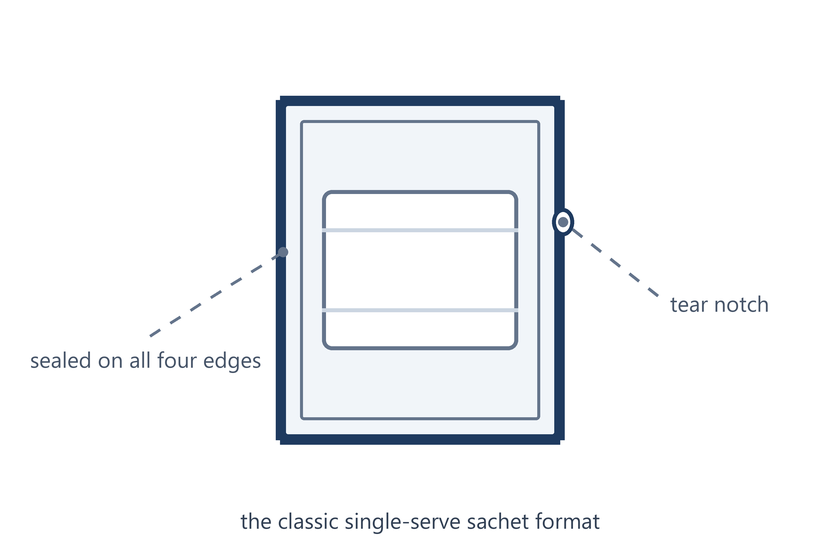
A flat sachet sealed on all four edges — the classic portion format for single servings, wipes, patches and samples. All twelve PP-series pre-made pouch machines run this format.
Doypack (Stand-Up Pouch)
A pre-made pouch with a bottom gusset that opens into a base, so the pack stands on the shelf. It is the default retail format for food and non-food products that need presence and volume. All twelve PP-series machines run doypack formats.
Spout Bag
A pouch with a welded spout and cap, for products that pour: sauces, liquids, liquid supplements. The spout is part of the pre-made bag, so the machine fills and seals around it.
Zipper Bag
A reclosable zipper lets the consumer open and reseal the pack across multiple uses — the standard choice for snacks and multi-portion kitchen products.
Flat Bag / Side-Gusset
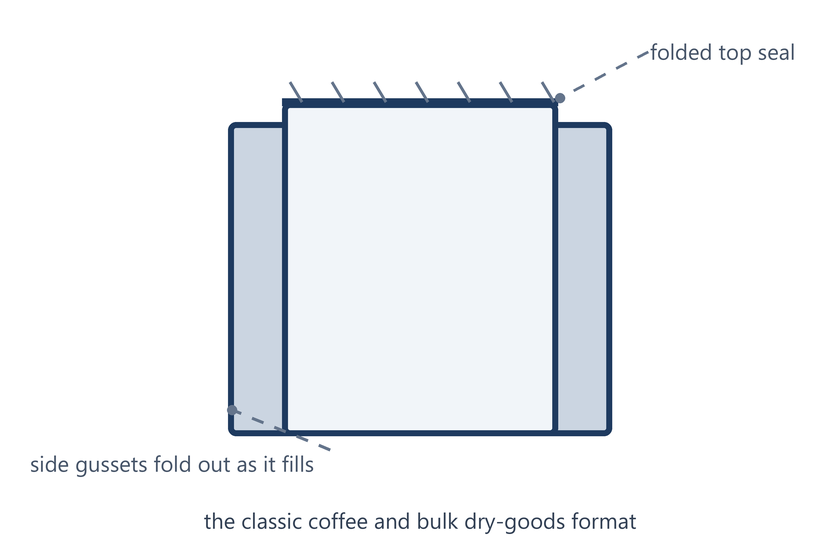
A flat bag construction with folded side gussets that expand as the bag fills — the classic format for coffee and bulk dry goods. The PP880 runs side-gusset bags up to 440 mm wide with weighing fills up to 10 kg.
Multipack & Bag-in-Bag
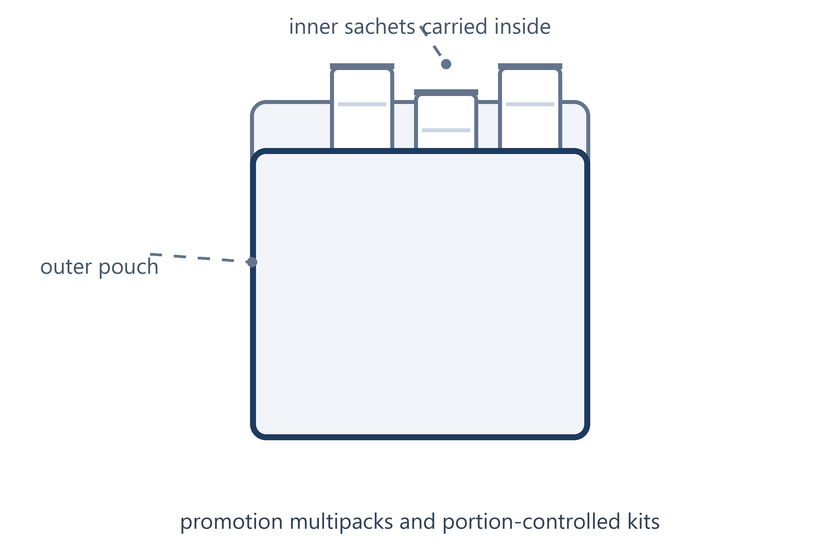
An outer pouch that carries inner sachets or items — promotion multipacks and portion-controlled kits. Bag-in-bag packing is a signature configuration of the compact PP420F.
What about stick packs?
Stick packs are made on vertical multi-lane machines, which is outside Path Pack's horizontal range. If you need a narrow single-serve format, a 4-side-seal sachet on a horizontal machine is the nearest equivalent.
Choose by machine, not by guesswork
Every pouch format above is tied to machines you can open and read — parameters, configurations and the honest trade-offs between models.