

What This Machine Does
Every pack weighed, every outlier rejected.
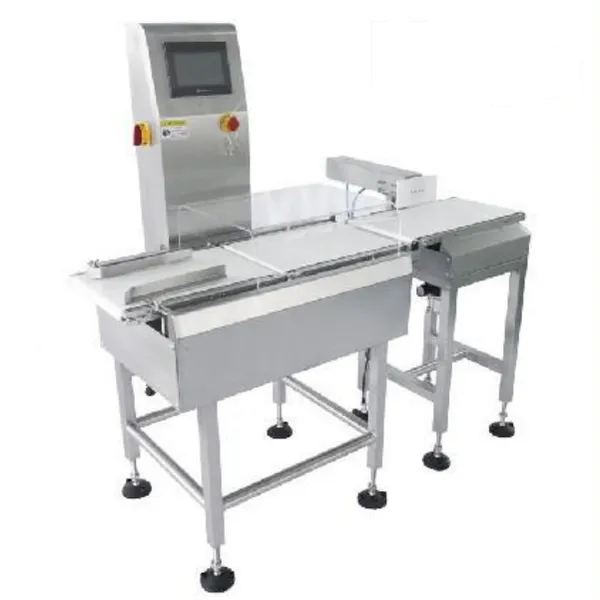
The check weigher sits after the packing machine and weighs each finished pack on the fly, rejecting anything outside tolerance. Six models span 100 g to 6 kg — from single sachets to multipacks — with the data trail a QA auditor asks for.
Best-Fit Products
Where it earns its place on the line
- Any line shipping by declared weight — the last line of defense before cartoning
- Food, pharma and regulated formats — weight records per pack, not per sample
- Filler drift detection — the trend tells you the dosing group needs attention before the customer does
Configurations & Options
Specified the way we ship it
- Models: CW100 / CW300 / CW1000 / CW2000 / CW4000 / CW6000
- Weighing range: 100 / 300 / 1000 / 2000 / 4000 / 6000 g
- Accuracy: ±1%
- Speed: 80–200 packs per minute by model
- Reject: out-of-tolerance packs pushed off the line automatically
Is this the right machine for you?
Four honest questions before you buy
- Do you ship to a declared weight? Then some authority can ask you to prove it — this is the proof machine.
- How would you know today if the filler drifted half a gram? Sample weighing finds it hours late.
- What pack weights do you run? Six models bracket everything from sachets to family packs.
- Is manual check-weighing eating labor? 80–200 packs a minute is what automation buys.
FAQ
The things buyers actually ask.
Where does it sit on the line?
After the packing machine and before cartoning — the position where a bad pack is cheapest to remove.
What happens to an underweight pack?
It is rejected off the line automatically — no operator judgment, no arguments with the scale.
Can it log results?
The weigh data feeds your QA records — per-pack weight history rather than spot samples.
Which model do I need?
Pick by your heaviest pack with headroom: the CW number is the range in grams.
 English
 Spanish
 French
 German
 Korean
 Russian
 Italian
 Arabic