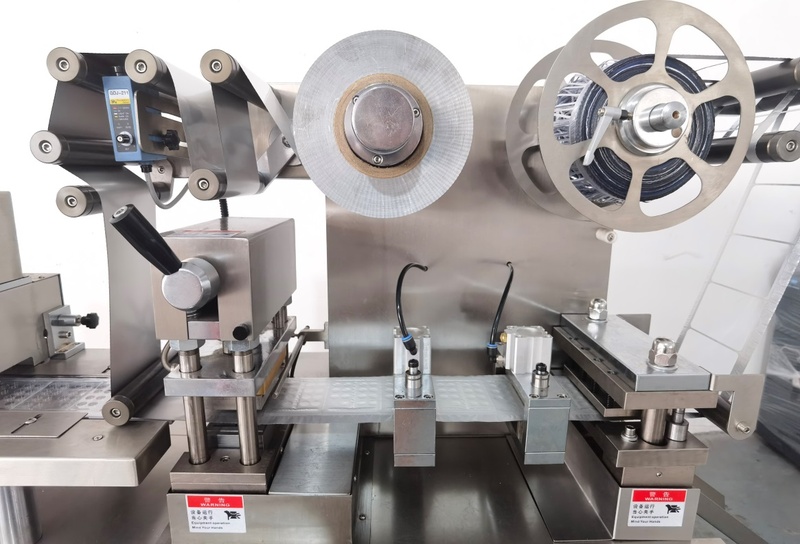
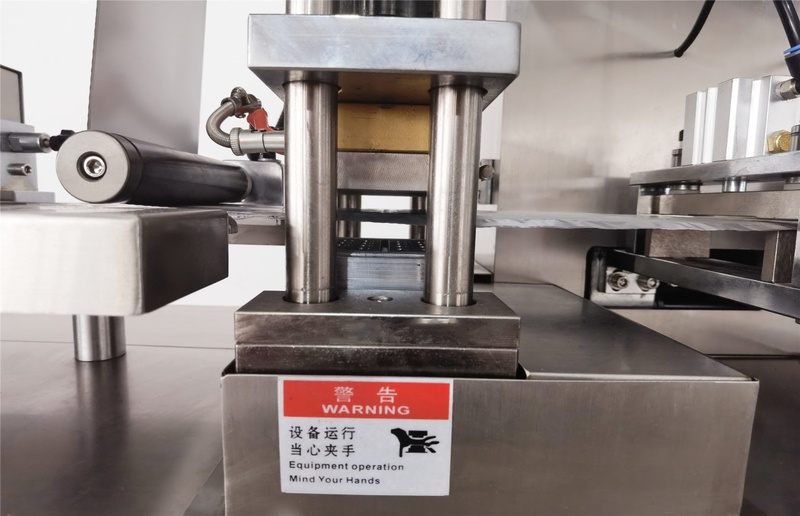
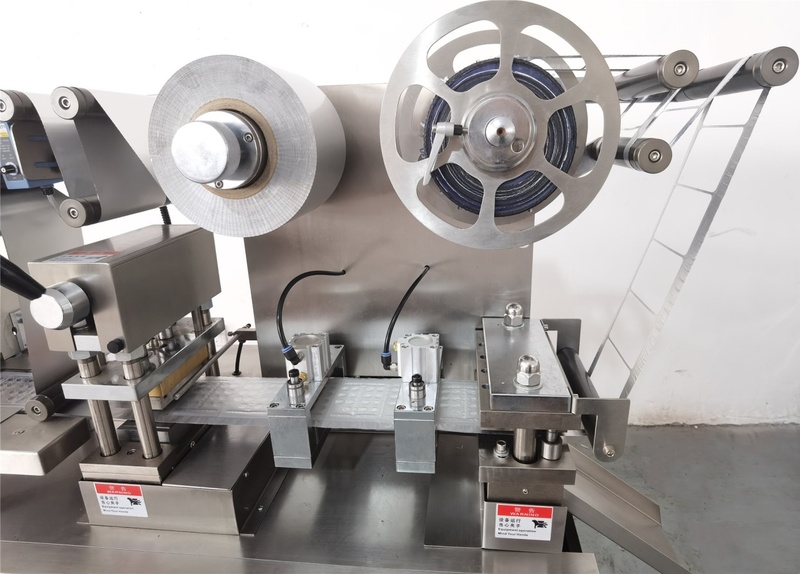
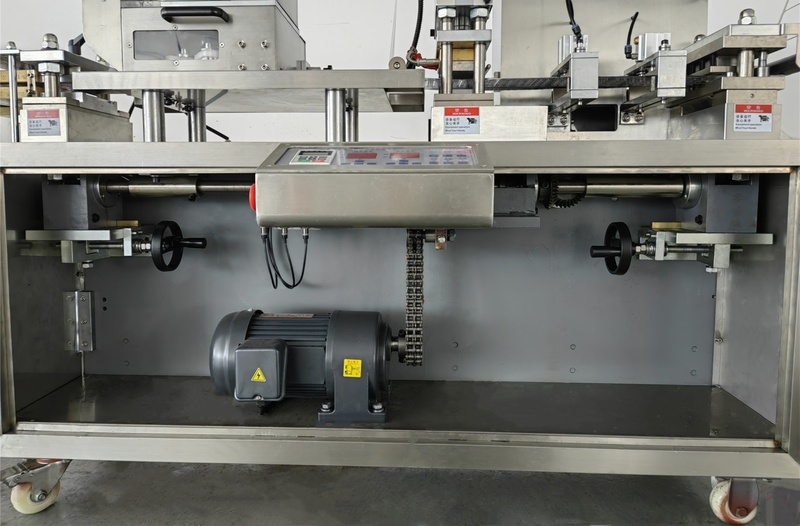
What This Machine Does
A four-station blister line that runs on 220 volts.
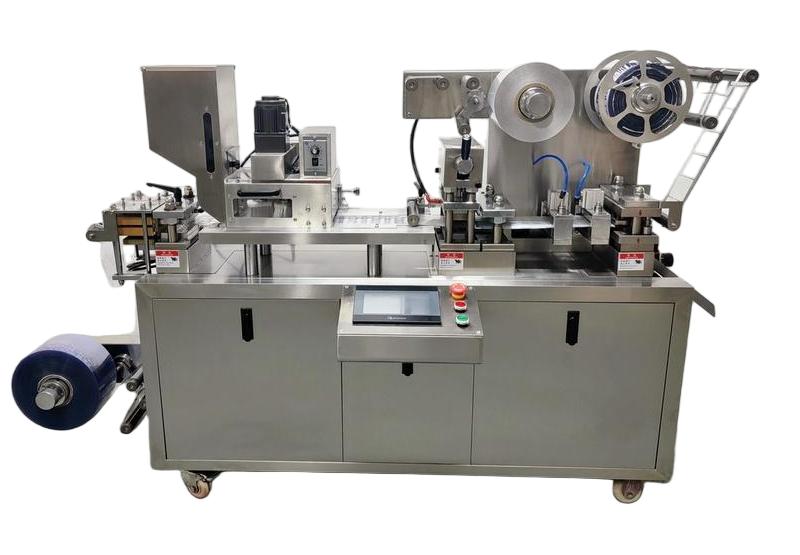
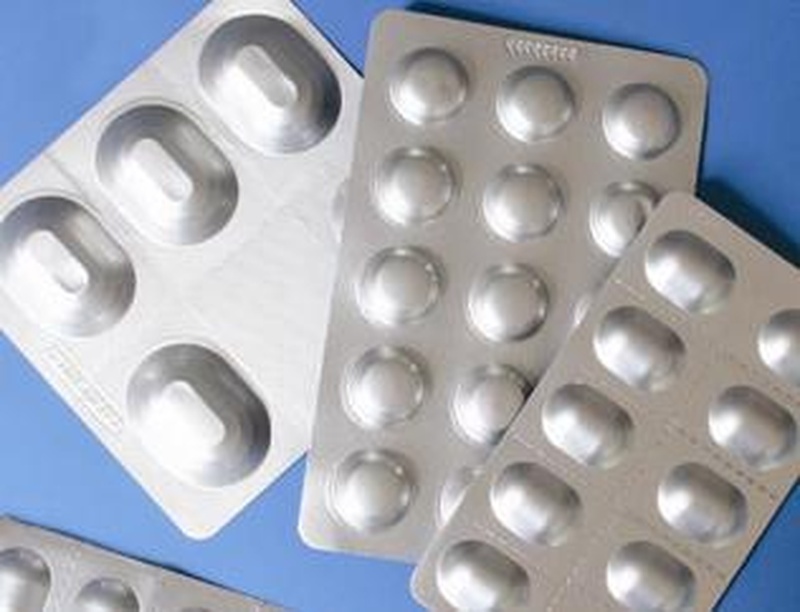
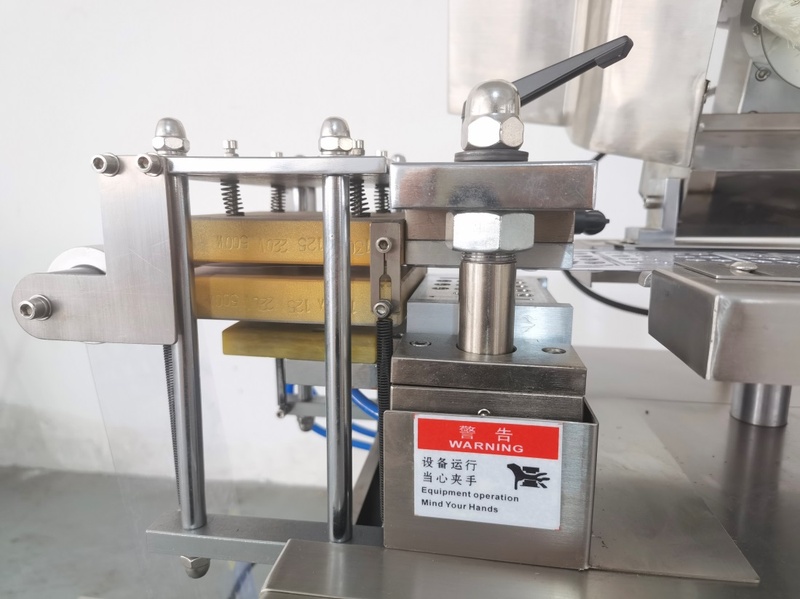
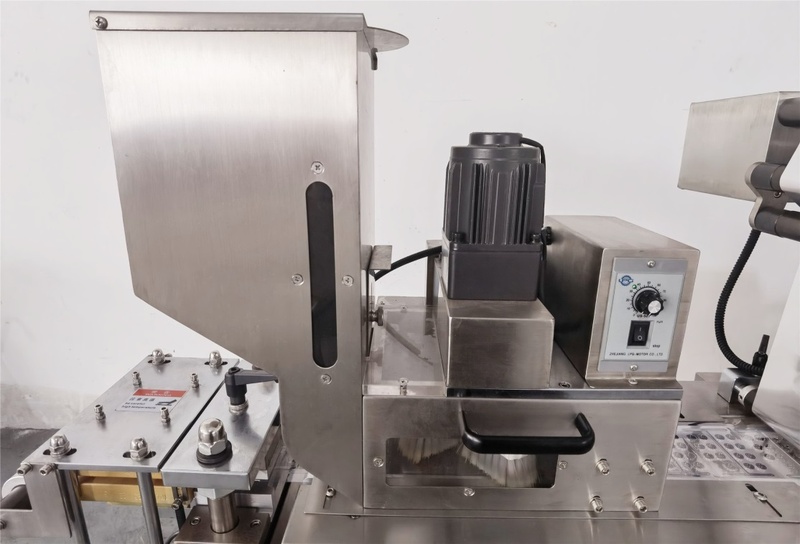
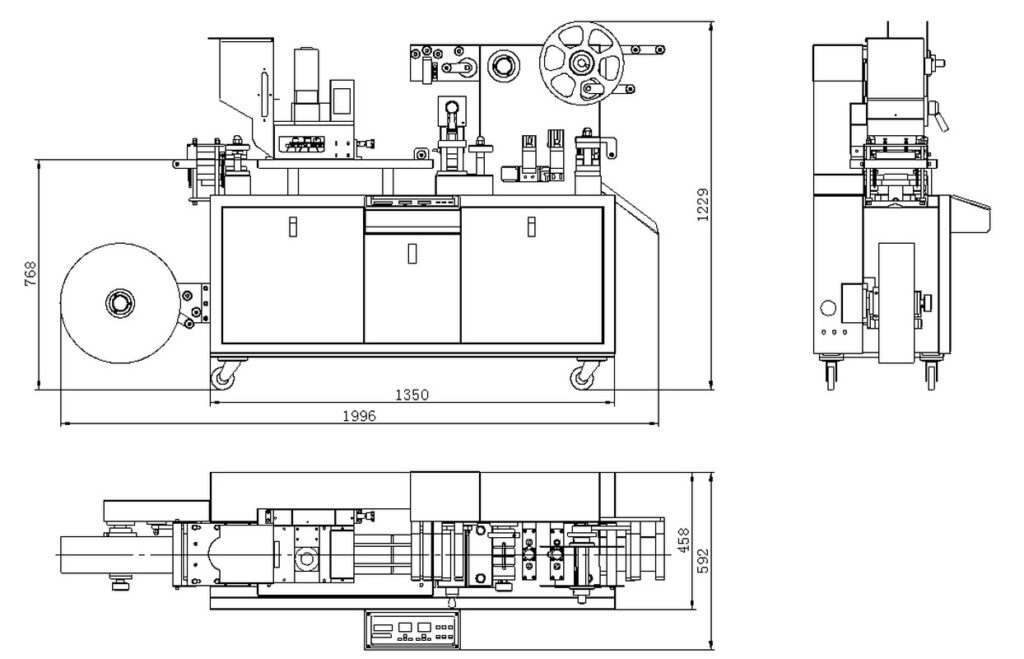
The JCP100 forms, fills, seals and blanks aluminum-plastic blisters in one continuous pass: PVC forming, feeding, heat sealing, blanking, automatically. It punches 10 to 38 strokes a minute — about 1,980 boards an hour on the standard 80 × 57 mm board — and it does it on 2.4 kW of 220 V power in a 350 kg footprint.
The trade-off: board scale versus everything else. This is the entry tier of the blister line, and its limits are honest ones: an 80 × 120 mm forming area and 24 mm of depth. If you are running pilot batches, medical-device kits or mid-volume pharma, that is exactly enough — and the machine installs without a three-phase upgrade. If you need 40,000-80,000 tablets an hour, the JCP180 is built for that number and this one is not.
Best-Fit Products
Runs these well — and what each one needs
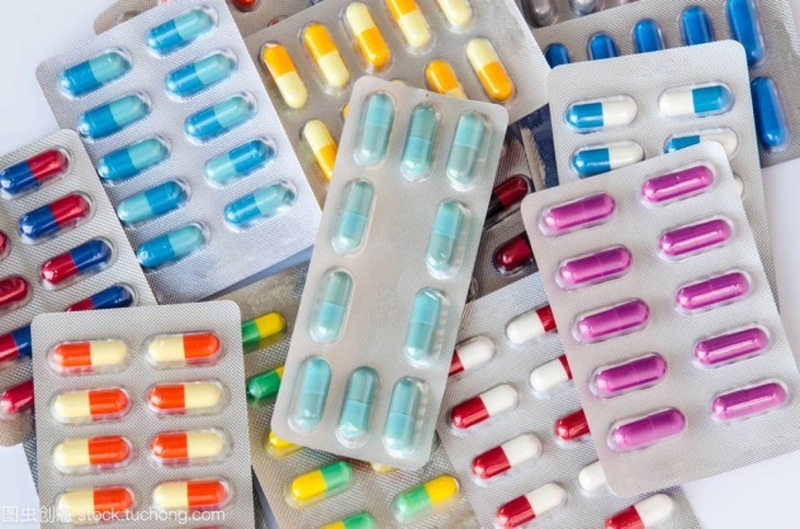
- Capsules, plain and sugar-coated tablets → cavities molded to the item, counted per board
- Ampoules and shaped medical items → pockets formed to shape, sealed under PTP foil
- Medical devices and electronics → dialysis-paper and aluminum-plastic formats from one platform
- Light food and candy portions → sealed boards at food-safe line speeds
- Pilot and contract batches → quick-connect molds swapped in minutes, not shifts
Not sure what these pouch styles look like? Our pouch types guide shows a labeled diagram of each bag style.
Configurations & Options
Made to the mold, configured to the order
- Molds: custom-shaped, designed to your product; quick-connect mounting
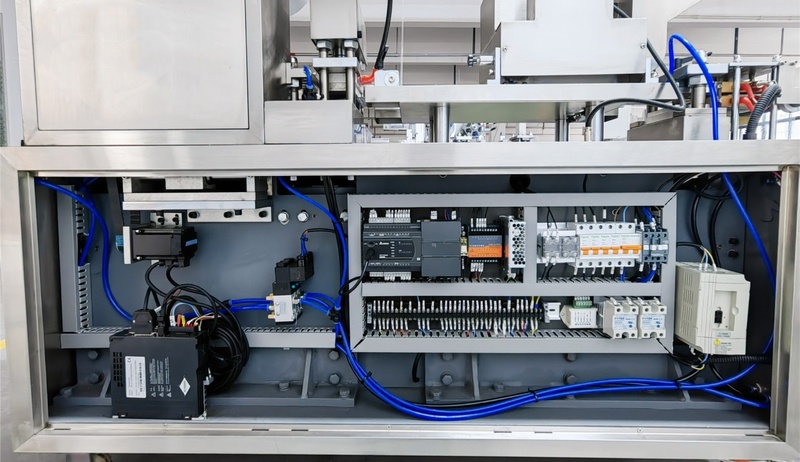
- Quality control: Omron-sensor missing-fill detection with a reject station, configured to order
- Registration: photoelectric control keeps PVC, PTP and feeding synchronized across stations; servo traction with print registration available
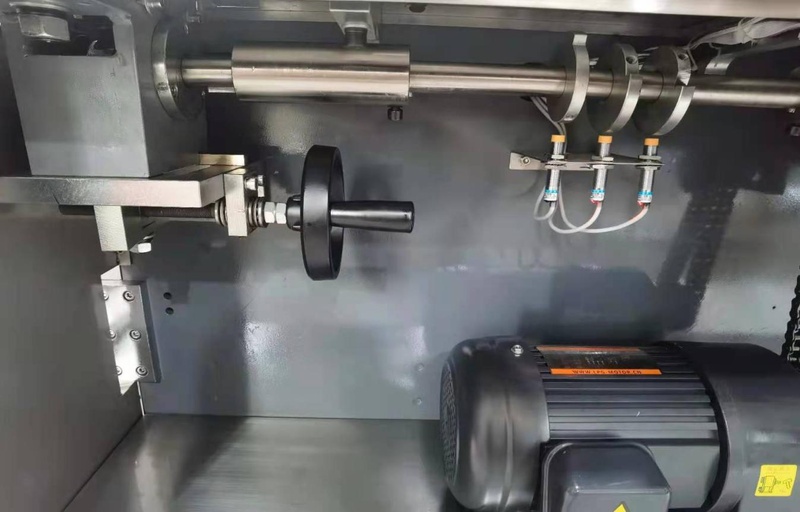
- Drive: row-chain transmission avoids gear error and gear noise; frequency-converter speed control
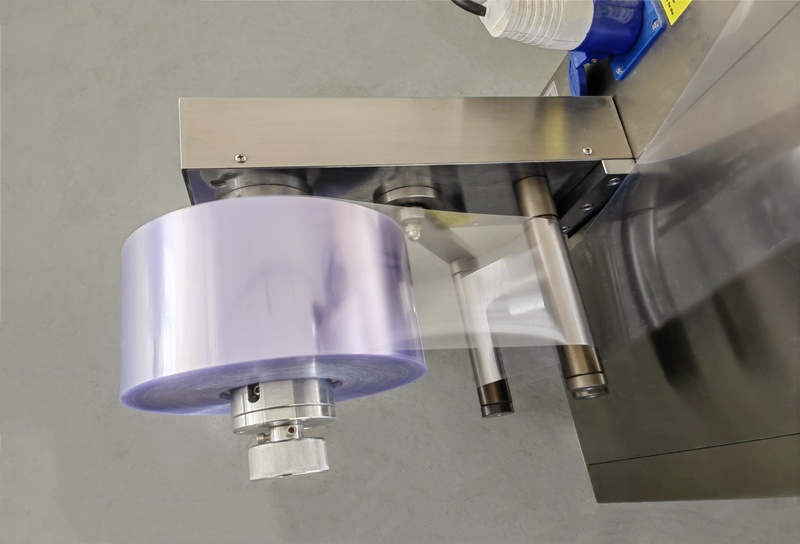
- Materials: PVC 0.15-0.5 mm, PTP foil 0.02-0.035 mm, dialysis paper 50-100 g, all at 120 mm width
- Control set: Delta PLC, Weinview touchscreen, Inovance servo, Omron encoder and proximity switch
Is this the right machine for you?
Four honest questions before you buy
- Does 1,980 boards an hour cover your schedule, or is this a pilot-and-batch role next to a faster line?
- Does every cavity fit inside an 80 × 120 mm forming area at ≤24 mm depth?
- Is 220 V what your room supplies? This machine draws 2.4 kW at 220 V — no three-phase requirement.
- Do you need alu-alu barrier formats? Tell us at quotation so the tooling set matches.
FAQ
The things buyers actually ask.
Boards per hour or tablets per hour?
Both, if you know your cavitation: 1,980 boards/hour at 10-38 strokes/min on the 80 × 57 mm standard board. Multiply by your cavities for tablets.
How deep can the pockets be?
Up to 24 mm within the 80 × 120 mm forming area. Deeper or larger formats move you up the JCP line.
What does missing-fill control do?
An Omron sensor set checks each board and a reject station knocks out boards with empty cavities — configured to order, so specify it when you ask.
What can it seal?
PVC with PTP aluminum foil, and dialysis-paper formats, all at 120 mm web width — the standard aluminum-plastic blister families.