Cartoning Machine
A cartoning machine picks folded carton blanks, opens them, pushes products — blisters, sachets, pouches, tubes — inside with a leaflet if needed, and folds the ends closed. Path Pack builds two horizontal cartoners: the JC130 standard model and the JCH200 high-speed model.
What a horizontal cartoner does
Horizontal cartoning is the workhorse of secondary packaging. Product arrives on an infeed conveyor, a carton blank is erect from the magazine, and a pusher transfers the product horizontally into the open carton. End flaps fold and seal — tuck-in or hot-melt glued — and the finished carton drops into case packing.
Typical loads: one or more blisters with a leaflet, counted sachet multipacks, single pouches, tubes, and rigid products that need a printed sleeve-style carton for shelf presentation.
JC130 and JCH200
The JC130 is the standard horizontal cartoner for typical line speeds and formats. The JCH200 high-speed cartoner targets higher-output lines where the cartoner must keep pace with upstream blister or sachet machines.
Both machines sit naturally at the end of our JCP blister lines, JC four-side-seal sachet lines and PP pouch lines — see End-of-Line Packaging Machines for the complete downstream picture, including JCJ130 and JCS130 bag sleeving machines.
Cartoning Machines from Path Pack
Current models, formats and speeds — every card links to the full machine page.
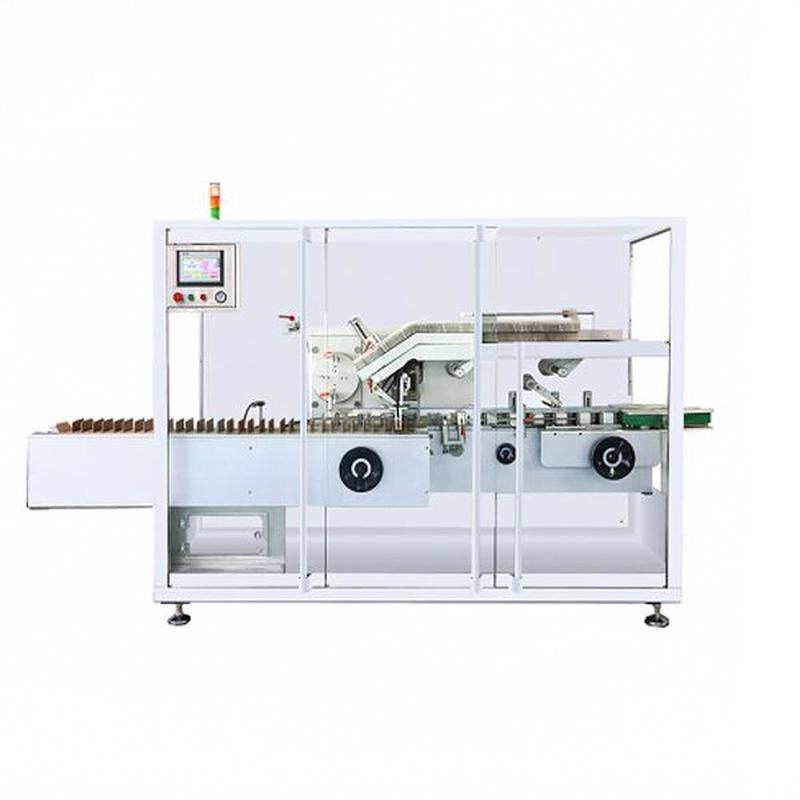
JC130 Horizontal Cartoning Machine
- Horizontal cartoner for blisters, sachets, pouches and tubes
- Carton erection, product push-in, leaflet insertion, end folding
- Full parameters on the machine page
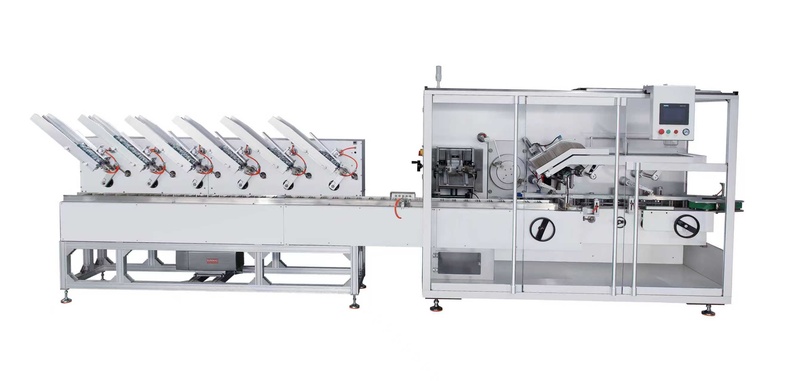
JCH200 High-Speed Cartoning Machine
- High-speed horizontal cartoning for demanding lines
- Same product range as the JC130 at higher output
- Full parameters on the machine page
Downstream of cartoning, JCS130 and JCJ130 bag sleeving machines dress cartons or bags for retail multipacks.
How to choose
- Carton size range — the machine must cover your smallest and largest blank, including future SKUs.
- Speed matching — the cartoner should run slightly faster than your upstream machine so it never becomes the bottleneck.
- Closure type — tuck-in flaps run without glue systems; hot-melt closure is more secure for heavier loads.
- Leaflet handling — if regulatory leaflets are required, specify automatic leaflet feeding with missing-leaflet detection.
- Infeed format — how products arrive (loose, stacked, in trays) decides the infeed module.
Frequently asked questions
What is the difference between horizontal and vertical cartoning?
Horizontal cartoners push the product sideways into an erected carton — the standard for blisters, sachets and pouches. Vertical cartoners drop product from above into bags or cartons, typical for granular products. Our JC130 and JCH200 are horizontal machines.
Can a cartoning machine handle blister packs from any blister line?
Yes, as long as the blister footprint and stack height fit the carton magazine tooling. We size the infeed and carton format against your actual blister dimensions.
How much does a cartoning machine cost?
Cost moves with speed range, number of infeed modules, leaflet system and closure type. Tell us your carton dimensions and target output and we return a written quotation for the exact configuration.
Do I need a cartoner or just a bag sleever?
Cartons give printed, rigid shelf presentation; bag sleeving is a lighter, cheaper operation for multipacks. Many lines run both — see the comparison on our End-of-Line Packaging Machines page.
What is a carton erecting machine?
A machine that takes flat folded carton blanks and opens them into erect cartons, ready for filling. Erecting is the first station of our JC130 and JCH200 — they erect, insert the product with an optional leaflet, and fold the ends closed in one pass.
What is the working principle of a cartoning machine?
Carton blanks feed from a magazine and are pulled open; the infeed conveyor delivers product alongside the open carton; a pusher transfers it in horizontally; end flaps fold and close by tuck or hot-melt. Size and speed changes are recipe and parts-set changes.
Semi-automatic or automatic cartoning — which do I need?
Semi-automatic machines hand-load the product at the insertion point; automatic machines feed product from an upstream line. If an operator presents each product, semi-auto saves capital; if a blister or sachet line feeds the cartoner directly, automatic is the only sensible choice.