
Blister Packing Machine
A blister packing machine seals products between a formed plastic or aluminium cavity and a lidding film, producing unit-dose blisters for tablets, capsules, medical devices and consumer goods. Path Pack builds three blister lines — JCP100, JCP180 and JCP270 — matched to different cavity sizes and output targets.
What a blister packing machine does
Blister packaging forms a cavity in a roll of PVC, PVDC or aluminium film, places one product in each cavity, and seals a lidding foil — usually aluminium or paper-aluminium — over the web. The result is a transparent, unit-dose pack that protects each tablet or device individually and lets the user push a single dose out through the foil.
Compared with sachets and pouches, blisters hold a fixed product position. That makes them the standard format for pharmaceutical tablets and capsules, medical device trays, and retail products where the product must stay visible and precisely placed, from batteries to candies.
Blister formats the JCP lines run
Plastic blister with aluminium lidding — the everyday tablet and capsule format for OTC and supplement products.
Alu-alu (all-aluminium) blisters — full barrier packs for hygroscopic or light-sensitive pharma products. See our alu-alu packing machine page for the details.
Shallow and deep-draw cavities — from flat diagnostic strips to thicker device trays, set by the forming die.
Double-aluminium and paper-alu lid variants for products with special barrier or opening requirements.
Blister Packing Machines from Path Pack
Current models, formats and speeds — every card links to the full machine page.
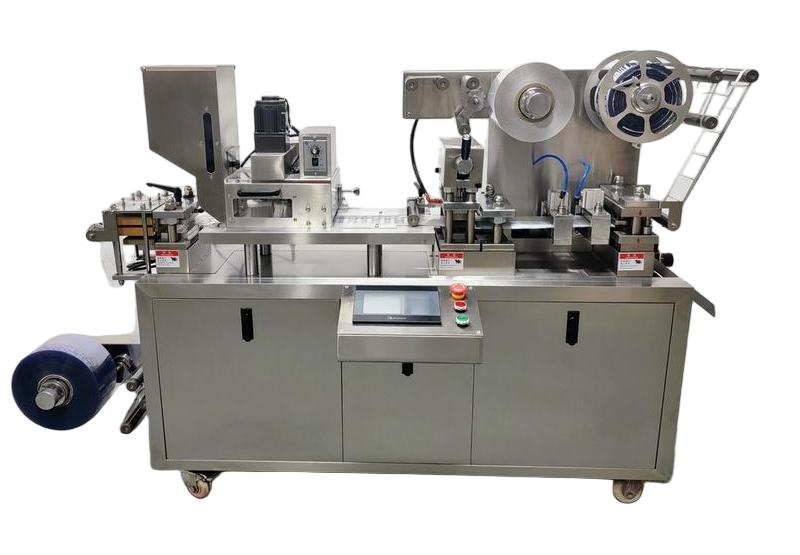
JCP100 Blister Packing Machine
- Compact blister line for tablets, capsules and unit-dose products
- Forming, filling, sealing and punching in one line
- Full parameters on the machine page
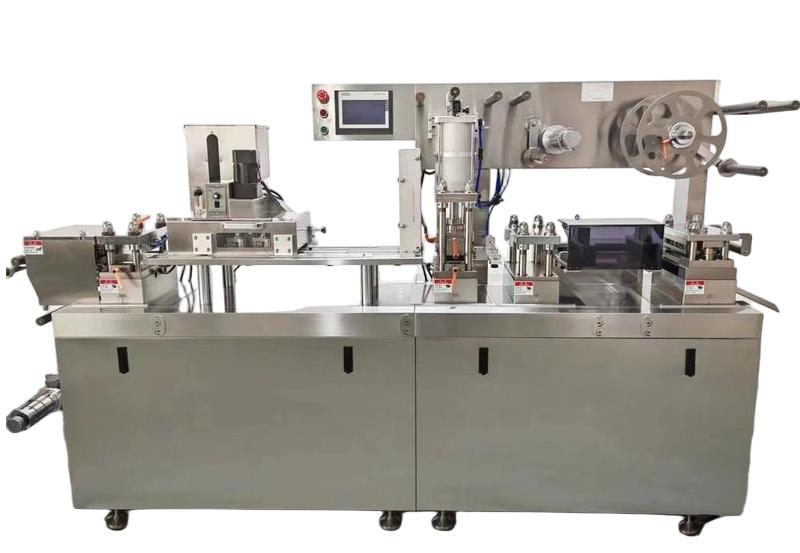
JCP180 Blister Packing Machine
- Larger-format blister line for wider webs and deeper cavities
- Same forming-sealing-punching sequence, higher web width
- Full parameters on the machine page
The JCP270 extends the series for wider blister webs and higher output. JCJ130 and JCS130 bag sleeving machines and JC130/JCH200 cartoners complete the line downstream — a blister is usually sleeved or cartoned after punching.
How to choose
- Cavity depth and product height — deep-draw devices need a machine rated for the forming depth, not just the web width.
- Barrier requirement — alu-alu forming needs different tooling and sealing parameters than PVC blisters.
- Output target — match the line speed to your real takt, not the peak figure; changeover time matters more if you run many SKUs.
- Downstream integration — decide early whether blisters go straight into a cartoner or are sleeved first.
- Validation trail — for pharma, ask for the documentation package (IQ/OQ support) with the machine.
Frequently asked questions
What products fit a blister packing machine?
Tablets, capsules, medical devices, diagnostic components and retail unit goods — any rigid product that benefits from a fixed cavity. Powders and liquids belong in sachet or pouch lines instead.
Blister, sachet or pouch — which one do I need?
Blisters win on unit-dose precision and product visibility; four-side-seal sachets win on per-dose cost for solid doses and flat items; premade pouches win for multipacks and retail shelf presence. Our four-side-seal and pouch pages cover those routes.
How much does a blister packing machine cost?
Price scales with web width, cavity complexity, barrier tooling and automation level. We quote per configuration — send your product dimensions and target output through the contact form and you get a written quotation, not a generic number.
Can a blister line also make alu-alu packs?
Yes, alu-alu is a tooling and sealing configuration of the same forming-sealing platform. Confirm your barrier spec when you request the quotation so the tooling is quoted correctly.
What is the working principle of a blister packing machine?
One continuous cycle: the forming station heats and draws the cavity web, product drops into each cavity, the lidding foil seals over the web, and the punch station cuts individual blisters out. Web width, cavity pitch and output all scale around that sequence.
Is this a pharmacy-grade machine for tablets and capsules?
Yes — tablet and capsule unit-dose blisters are the core application of the JCP lines, with print-registered lidding and the documentation package pharma buyers expect. Medical devices and diagnostic components run on the same platform with different tooling.
Do you sell manual or table-top blister machines?
No. Manual table-top blister sealers are a separate low-cost category for prototypes. Our smallest configuration is the compact JCP100 line, which runs the same forming-sealing-punching cycle as the JCP180 and JCP270 — built for production, not for the bench.