
Alu-Alu Packing Machine
An alu-alu packing machine forms blisters entirely in aluminium foil — no plastic cavity — giving a full moisture, light and gas barrier for sensitive tablets and capsules. The JCP blister platform runs alu-alu as a tooling configuration, with cold-forming dies and adapted sealing parameters.
Why alu-alu instead of PVC blister
PVC blisters are transparent and cheap, but plastic film always lets some moisture and oxygen through. Hygroscopic products — effervescent tablets, certain antibiotics, hygroscopic capsules — can lose potency inside a plastic blister over their shelf life.
An alu-alu pack cold-forms the cavity from aluminium laminate and seals it with aluminium lidding. Nothing is transparent, but the barrier is close to a glass bottle: moisture ingress drops to a fraction of PVC levels. That is why pharmacopoeia-driven products and tropical-climate markets default to alu-alu.
What changes on the machine
Cold forming instead of thermoforming — the cavity is pressed into the laminate, so the forming station carries higher force and slower cycle contribution.
Longer forming web — aluminium cavities need more film length per cavity than plastic; the machine accounts for this in its indexing.
Printed lidding registration — alu-alu lidding is printed, so print registration sensors are part of the standard configuration.
Same downstream — sealing, perforation and punching follow the identical sequence as plastic blisters, so cartoning and sleeving lines are shared.
Alu-Alu Packing Machines from Path Pack
Current models, formats and speeds — every card links to the full machine page.
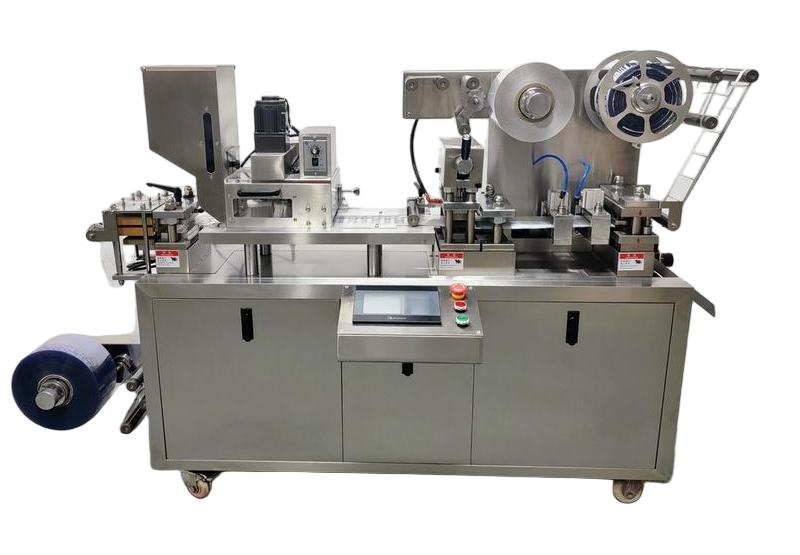
JCP100 Blister Packing Machine
- Runs PVC, PVDC and alu-alu tooling sets
- Forming, filling, sealing and punching in one line
- Full parameters on the machine page
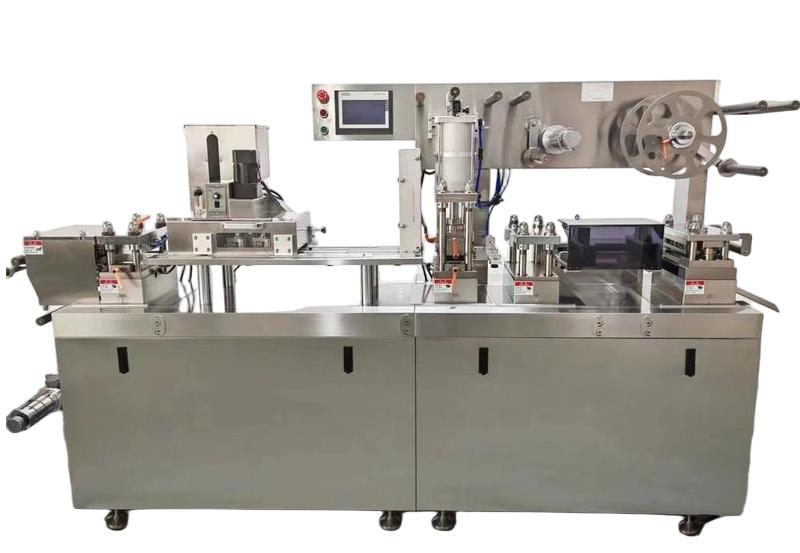
JCP180 Blister Packing Machine
- Wider web and deeper cavity capability
- Same alu-alu tooling route for full-barrier packs
- Full parameters on the machine page
The JCP270 covers wider webs for high-volume alu-alu production. For products that do not need a full barrier, standard PVC blister tooling on the same platform costs less to run.
How to choose
- Confirm the barrier spec first — a true alu-alu requirement (hygroscopic or light-sensitive product) justifies cold-forming; otherwise PVDC-coated PVC is cheaper.
- Cavity geometry — cold-formed cavities are larger than the product footprint; check that the resulting pack size still fits your carton.
- Lidding print — decide on print registration requirements before ordering, since retrofitting sensors into a line is more expensive than specifying them.
- Climate of your market — tropical-zone distribution pushes more products from plastic to alu-alu.
- Validation needs — pharma lines should ship with the documentation package you will need at installation qualification.
Frequently asked questions
What is the difference between alu-alu and alu-PVC blister packing?
Alu-PVC (thermoformed) uses a plastic cavity with aluminium lidding — transparent, cheaper, moderate barrier. Alu-alu (cold-formed) uses aluminium laminate for both cavity and lid — full barrier, opaque, slightly larger packs. The same JCP platform runs both with different tooling.
Can one machine switch between alu-alu and PVC production?
Yes. The forming station swaps between the thermoforming and cold-forming tool sets, and sealing parameters change per recipe. Changeover time depends on how many SKUs you alternate between.
Is alu-alu packaging only for pharmaceuticals?
It is the pharma standard, but any moisture-sensitive unit product — some diagnostic strips, certain nutraceuticals — benefits the same way.
How much does an alu-alu packing machine cost?
Cold-forming tooling and print registration add to the base blister line price, and final cost depends on web width and automation. We quote per product and configuration — send your tablet dimensions and barrier requirement for a written quotation.
What does alu-alu actually mean?
Aluminium-aluminium: both the formed cavity and the lidding are aluminium laminate, with no plastic layer. The pack is opaque and close to a glass bottle in barrier performance — that is the whole point of the format.
PVC, PVDC or alu-alu — which film do I need?
It is a barrier ladder. PVC is transparent and cheapest with moderate barrier; PVDC-coated PVC adds moisture protection for moderately sensitive products; full alu-alu is the maximum barrier for hygroscopic and light-sensitive doses. Your product stability data picks the rung.
What sealing temperature does a blister machine run at?
The laminate dictates the number, not the machine — every film has a seal-initiation temperature and dwell window on its datasheet. The machine’s job is holding temperature, pressure and dwell steady at speed; we set recipes against the film you actually buy.