
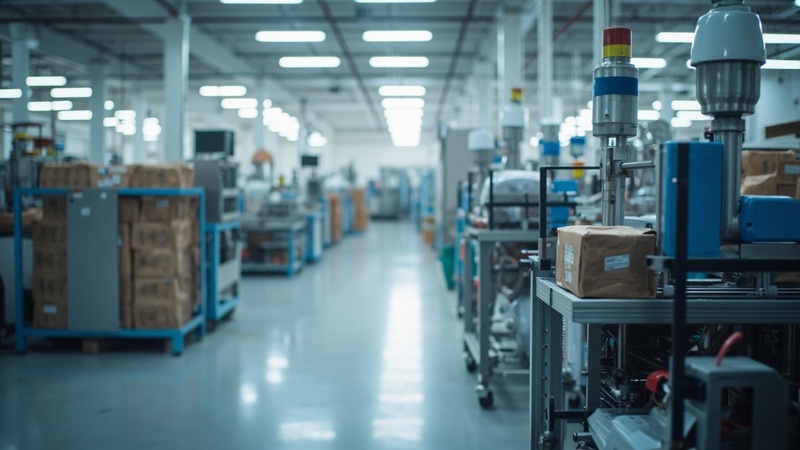
When investing in automated packaging equipment, one of the most fundamental decisions is whether to deploy a horizontal packaging machine or a vertical packaging machine (VFFS). This choice affects not only the type of products you can handle but also your production speed, facility layout, material costs, and long-term operational efficiency. Making the wrong decision can result in costly retrofits, production disruptions, and missed market opportunities.
This guide examines the engineering principles, performance characteristics, and ideal applications of both orientations to help production engineers, plant managers, and procurement professionals make informed equipment decisions.
Key Takeaways
Quick answer: Horizontal machines (flow wrappers) suit solid, self-supporting products; vertical machines (VFFS, baggers) suit gravity-fed and loose products — orientation follows the product.
- Two orientations, two worlds — horizontal wrapping vs vertical forming/filling/bagging
- Compare core options side by side — flow wrappers, VFFS, baggers and cartoners differ in speed, format and integration
- Cost is total, not sticker — film, changeover and integration weigh as much as purchase price
- Industry patterns hold — confectionery, bakery, frozen and hardware each favor one orientation
The Two Orientations
Horizontal Packaging Machines
Horizontal packaging machines—commonly including flow wrappers, horizontal form-fill-seal (HFFS) systems, and tray sealers—transport products through the packaging process on a horizontal plane. The product enters the machine on a conveyor, is wrapped or sealed while moving horizontally, and exits the machine on an outfeed conveyor at the same level.
The defining characteristic is that gravity works perpendicular to the product flow. The product sits on a flat surface (conveyor belt or product handling system) throughout the packaging cycle. This orientation is particularly advantageous for products that could shift, settle, or break if handled vertically.
Vertical Packaging Machines (VFFS)
Vertical form-fill-seal (VFFS) machines operate with the product flow moving vertically. Film is formed into a tube in a downward direction, product is dropped into the tube from above, and the package is sealed and cut at the bottom. The product falls under gravity through a forming collar and into the packaging tube.
VFFS machines dominate markets for loose, granular, and free-flowing products because gravity naturally assists the filling process. The vertical orientation also minimizes the machine footprint, making VFFS attractive for facilities with limited floor space.
How Do Core Technical Options Compare?
Product Compatibility
The single most important factor in choosing between horizontal and vertical packaging is product type and physical characteristics.
Products best suited for horizontal packaging:
– Solid, pre-formed items (biscuits, chocolate bars, soap)
– Fragile products that cannot withstand free-fall (pastries, decorated cakes)
– Sticky or irregularly shaped items (medical patches, adhesive strips)
– Multi-packs and secondary packaging (tray overwrapping, bundling)
– Products requiring orientation control (printed items, branded products with a “right side up”)
Products best suited for vertical packaging:
– Free-flowing granular products (rice, sugar, nuts, seeds)
– Powders (flour, spices, coffee, detergent powder)
– Small pieces (candy, snacks, frozen vegetables)
– Liquids and pastes (sauces, shampoo, yogurt)
– Products sold by weight or volume where precise dosing is critical
A pharmaceutical patch manufacturer, for example, would find horizontal flow wrapping essential because the adhesive patches cannot be dropped through a vertical forming tube without risk of contamination, adhesion to tube walls, or orientation errors. Conversely, a snack food producer packaging mixed nuts would find VFFS far more efficient because the product flows naturally into vertical bags.
Speed and Throughput
Both machine types can achieve impressive speeds, but their performance characteristics differ:
| Parameter | Horizontal (Flow Wrapper) | Vertical (VFFS) |
|---|---|---|
| Typical Speed | 40–600 ppm | 30–200 ppm |
| Max Speed | 800+ ppm (small items) | 300+ ppm (small sachets) |
| Speed sweet spot | 100–400 ppm | 60–150 ppm |
| Multi-lane capability | 2–3 lanes typical | 2–10+ lanes common |
For solid products at high speed, horizontal flow wrapper how flow wrappers work in details generally outperform VFFS because the product handling is more controlled and continuous. For small sachets and stick packs, high-output VFFS machines can achieve aggregate outputs exceeding 1,000 packages per minute.
Floor Space and Layout
VFFS machines have a significantly smaller footprint than horizontal systems. A typical VFFS machine occupies 1.5–3 square meters of floor space, while a horizontal flow wrapper with infeed and outfeed conveyors typically requires 4–10 square meters. This 2–3x difference can be decisive in facilities where floor space is at a premium.
However, horizontal machines offer advantages in line integration. Because the infeed and outfeed are at the same height, horizontal machines integrate more naturally into existing production lines where products move on conveyors between processing stations. VFFS machines require product to be elevated or fed from above, which may necessitate additional handling equipment such as bucket elevators, vibratory feeders, or specialized product delivery systems.
Related: Flow Wrapper Selection Criteria Checklist
Film and Material Efficiency
Material consumption varies significantly based on package style:
- Horizontal flow wrappers create contour-fitting wraps that minimize excess material. For solid products, film usage is typically 15–30% lower than equivalent vertical pouches.
- VFFS machines produce vertical pillow bags or gusseted pouches that typically have more headspace, especially for solid products. For powders and granular products, VFFS achieves good material efficiency because the product fills the bag more completely.
Film width utilization also differs. Horizontal flow wrappers typically use film widths closely matched to the product height plus seal margins, while VFFS machines require film widths matched to the bag circumference, which can be less efficient for wide, flat products.
Sealing Quality and Integrity
Both technologies can produce hermetic seals suitable for food, pharmaceutical, and medical device applications. The differences lie in seal type and inspection:
- Horizontal flow wrappers typically use end-seal jaws that crimp and seal both ends simultaneously, creating consistent seal width and pressure. Hot knife systems produce particularly clean, strong seals ideal for moisture-barrier applications.
- VFFS machines create longitudinal and cross seals. The longitudinal seal runs the length of the bag (fin seal or lap seal), while the cross seal closes each bag. Seal consistency can be affected by product weight pulling down on the forming tube.
For sterile medical packaging and pharmaceutical applications, horizontal flow wrappers are often preferred because the sealing process is more controlled and easier to validate under ISO 11607 standards.
Case Study — A Confectionery Decision
Client profile: a confectionery manufacturer, packaging chocolate-covered biscuit bars. The initial inquiry asked for a VFFS machine.
Our recommendation: a horizontal flow wrapper. The reasoning:
- The products are solid, discrete bars — horizontal feeding keeps their orientation and presentation
- The production target was hundreds of packs per minute
- The chocolate coating made free-fall filling a damage risk
- The line runs multiple SKUs, so changeover time mattered
- Retail presentation — product visibility through the wrap — was a requirement
The client tested both configurations with their own product before confirming the horizontal recommendation.
How Do Cost Options Compare?
Capital Investment
Equipment investment scales with speed, format count and integration scope — request quotations for your application. Annual operating costs (film, maintenance, energy, labor) belong in the comparison alongside it.
VFFS machines generally have a lower entry price point due to simpler mechanical construction. However, the price gap narrows significantly at higher automation levels, and fully featured VFFS systems with multi-column layouts, MAP, and aseptic filling capabilities can exceed the cost of advanced horizontal machines.
Operating Costs
Key operating cost differences include:
- Film consumption: Horizontal wrappers typically save 15–30% on film for solid products
- Labor: Both systems can run with 1–2 operators, but horizontal lines may require additional labor for product placement if upstream automation is not available
- Maintenance: VFFS machines have simpler mechanics (fewer sealing stations), but horizontal machines with servo drives often have better predictive maintenance capabilities
- Changeover: Horizontal flow wrappers average 15–45 minutes; VFFS machines average 20–60 minutes depending on bag style complexity
Total Cost of Ownership
When evaluating over a 5–10 year lifecycle, the total cost of ownership depends heavily on production volume and product type. For a facility packaging solid products at 200+ ppm, a horizontal flow wrapper’s film savings alone can offset its higher purchase price within 18–30 months.
Industry-Specific Recommendations
Food Industry
The food industry uses both orientations extensively, with the choice driven by product type:
- Bakery and confectionery: Horizontal flow wrapping dominates for biscuits, chocolate bars, and baked goods where product integrity and presentation are critical
- Snack foods: VFFS is prevalent for chips, nuts, and loose snacks where gravity filling is efficient
- Frozen foods: Horizontal wrappers are preferred for frozen patties, prepared meals, and ice cream bars
- Coffee and spices: VFFS leads for ground coffee, whole beans, and powdered seasonings
Pharmaceutical Industry
Horizontal packaging is strongly preferred in pharmaceutical applications. Medical devices, diagnostic kits, and transdermal patches require controlled product handling that only horizontal systems can provide. The ability to maintain product orientation and prevent free-fall damage makes horizontal flow wrapping the standard for medical device secondary packaging.
Pharmaceutical and patch applications run on our JC400 Pouch Feeder — packaging accuracy and seal integrity are validated with the customer’s film before shipment.
Cosmetics and Personal Care
Both orientations see use in cosmetics, depending on the product:
- Solid cosmetics (soap bars, solid perfumes): Horizontal flow wrapping
- Liquid cosmetics (shampoos, lotions): VFFS for sample sachets or secondary packaging
- Multi-packs and gift sets: Horizontal overwrapping
Integration with Upstream and Downstream Equipment
The machine orientation affects how easily it integrates with the broader production line:
Horizontal advantages:
– Natural integration with processing lines where products move on conveyors
– Easy connection to checkweighers, metal detectors, and X-ray inspection systems at the same belt height
– Straight-line product flow minimizes handling points
Vertical advantages:
– Direct connection to bulk product handling systems (silos, hoppers, augers)
– Compact layout allows positioning above or below other equipment
– Gravity-assisted feeding reduces power consumption for product transfer
Why Path Pack?
Path Pack specializes in horizontal flow wrapping technology engineered for the world’s most demanding production environments. Our machines are built with Siemens servo motors, Schneider Electric control systems, and sensors from established manufacturers.
Every machine ships with documentation, spare parts lists and remote support. Lines we build run applications from pharmaceutical patch packaging to biscuit wrapping.
Whether you are upgrading an existing horizontal packaging line or evaluating whether horizontal technology is right for your product range, our engineering team provides no-obligation consultations including product testing at our facility.
In the horizontal orientation, our range includes the JC250 Flow Wrapping Machine.
Frequently Asked Questions
Can the same product be packaged on both horizontal and vertical machines VFFS comparison with flow wrappers?
Some products can be packaged on either type, but results vary significantly. Solid items like biscuits can be wrapped horizontally with a tight, contour-fitting package that uses minimal film, or they can be placed in vertical bags with more headspace and higher material costs. The choice depends on your priorities: packaging efficiency and presentation (favor horizontal) or floor space savings (favor vertical).
Which orientation requires less factory floor space?
Vertical packaging machines typically require 50–70% less floor space than horizontal systems. A standard VFFS machine occupies 1.5–3 square meters, while a horizontal flow wrapper with infeed and outfeed conveyors needs 4–10 square meters. This makes VFFS attractive for facilities with space constraints or for operations needing multiple packaging lines in a limited area.
How do changeover times compare?
Horizontal flow wrappers typically change over in 15–45 minutes with modern servo-driven models, compared to 20–60 minutes for VFFS machines. However, changeover time depends more on the specific machine design, automation level, and operator skill than on the orientation itself. Quick-change features like toolless forming collar adjustment and recipe-based parameter recall can reduce changeover to under 10 minutes on both machine types.
Which technology is better for pharmaceutical packaging?
Horizontal flow wrapping is generally preferred for pharmaceutical applications because it provides controlled product handling without free-fall, maintains product orientation, and produces consistent hermetic seals that are easier to validate under ISO 11607 standards. VFFS is used for pharmaceutical powders and granules, but solid dosage forms and medical devices are almost exclusively packaged horizontally.
What is the typical payback period for horizontal vs vertical equipment?
Payback periods depend on production volume and application, but horizontal flow wrappers typically achieve ROI in 12–24 months through film savings (15–30% less material for solid products) and higher throughput. VFFS machines typically show ROI in 12–30 months, with shorter payback for high-volume powder and granular applications where gravity-assisted filling maximizes efficiency.
Conclusion
The choice between horizontal and vertical packaging machines is not simply a matter of preference—it is a strategic decision driven by product characteristics, production requirements, and long-term cost considerations. Horizontal flow wrappers excel with solid products, offer superior material efficiency, and integrate naturally into production lines. Vertical machines offer compact footprints and excel with free-flowing products where gravity-assisted filling provides a natural advantage.
The key to making the right decision is a thorough analysis of your specific product, production volume, facility constraints, and total cost of ownership over the equipment lifecycle. Avoid the temptation to choose based on purchase price alone—the wrong orientation can cost far more in ongoing operational inefficiency than the initial capital savings.
Path Pack builds horizontal packaging machines in Hangzhou, China. Every machine is tested with the customer’s product and film before it ships. If you are evaluating a flow wrapper or troubleshooting a line already in production, contact our engineering team — we reply within one working day.
By Path Pack Technical Team
Not sure which orientation fits your product? → Send Path Pack your product details for an orientation and machine recommendation.



 English
  Spanish
  French
  German
  Korean
  Russian
  Italian
  Arabic