
Key Takeaways
Quick answer: HFFS wraps products horizontally in film (flow wrapping); VFFS forms bags vertically around gravity-fed product — product shape and how it feeds decide the technology.
- Different forming directions — horizontal film tube vs vertical bag forming
- Speed profiles differ — HFFS typically 40-600 packs/min constrained by cutting and registration
- Package styles differ — HFFS pillow and three-side seal vs VFFS bag formats
- Product suitability is decisive — uniform solids suit HFFS; loose or granular products suit VFFS
- TCO beyond purchase — film efficiency, auxiliary equipment and labor shape total cost
Introduction
Choosing between horizontal and vertical form fill seal technologies is one of the most consequential decisions in packaging line design. This choice affects equipment costs, production capacity, package aesthetics, material efficiency, and operational flexibility for years to come. Yet the decision is often made with incomplete understanding of the fundamental differences between these technologies and how those differences translate into practical advantages and limitations for specific applications. We have seen how the wrong choice—even when made with good intentions—can create operational challenges that persist throughout the equipment’s service life.
This guide provides an in-depth comparison of horizontal form fill seal (HFFS) and vertical form fill seal (VFFS) technologies. We will examine the fundamental operating principles of each technology, compare their strengths and limitations across key performance dimensions, explore which applications are best suited to each technology, and provide guidance for making the optimal choice for your specific circumstances. Whether you are specifying new equipment, considering technology alternatives, or simply seeking to understand the packaging industry better, this guide will provide the knowledge you need.
Understanding HFFS and VFFS technologies is essential for packaging professionals across industries. These machines form the backbone of flexible packaging production worldwide, and the differences between them create distinct advantages for different product types, production volumes, and business requirements.
How HFFS and VFFS Machines Work
How Horizontal Form Fill Seal Works
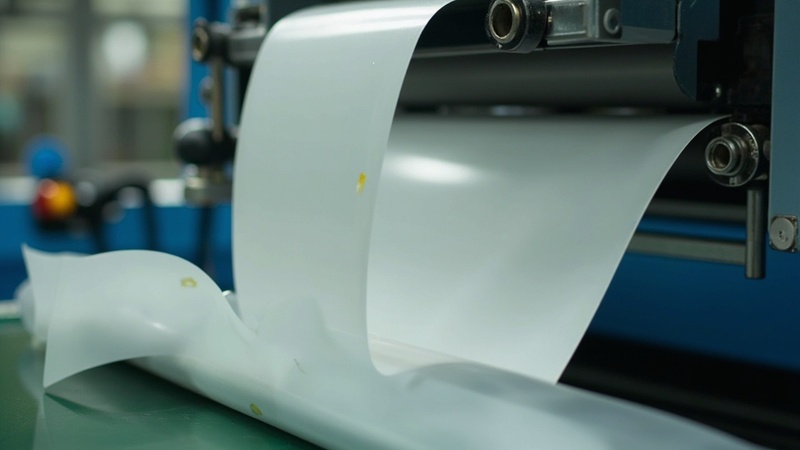
Horizontal form fill seal machines, also known as flow wrappers, represent a fundamentally different approach to packaging. In HFFS systems, the film moves horizontally through the machine while the product is pushed or fed into the film stream.
The basic HFFS process follows this sequence: The flat film web is drawn from the unwind roll and passes over a forming collar that shapes the film into a tube around a product conveyor. The tube is sealed vertically at the trailing edge of each package. Products are fed into the tube from a hopper or product conveyor. As the film advances, products are carried forward. A rotary knife cuts the tube between packages at the appropriate position. The longitudinal seal (back seal) is made either before or after the cross seal, depending on the machine design.
The horizontal orientation means that products flow through the machine in a flat, planar motion. This has significant implications for product handling, package geometry, and production characteristics.
Path Pack horizontal flow wrappers exemplify modern HFFS technology, incorporating servo-driven film transport, precise registration control, and advanced sealing systems that deliver high-quality packages across a wide range of applications.
The horizontal (HFFS) configuration described above is what machines such as our JC250 Flow Wrapping Machine implement.
How Vertical Form Fill Seal Works
Vertical form fill seal machines operate on a fundamentally different principle. In VFFS systems, the film is drawn vertically downward from the unwind roll, formed into a tube around a product delivery tube, sealed at the bottom, filled with product, and sealed at the top before being cut free.
The basic VFFS process sequence is: Flat film web is drawn from the unwind roll and wrapped around a forming tube. The film edges are brought together and sealed longitudinally, creating a continuous tube. The bottom of the tube is sealed with a horizontal seal. Product flows down through the forming tube, filling the package from below. When the proper fill level is reached, the top seal closes and cuts, completing the package.
The vertical orientation means that products fall by gravity through the machine. This creates entirely different requirements for product flow characteristics and creates distinct advantages and limitations compared to HFFS technology.
Key Differences Between HFFS and VFFS
The different orientations create fundamental mechanical differences:
Film path geometry: HFFS machines have horizontal film paths that require relatively simple guiding and tensioning systems. VFFS machines have vertical film paths that must manage film weight and maintain tension as the film descends.
Product delivery: HFFS machines use mechanical conveyors to push or place products into the packaging zone. VFFS machines rely on gravity to deliver products through the forming tube.
Sealing configuration: HFFS machines typically have the cross-sealing mechanism at the end of the film path with the longitudinal seal running continuously. VFFS machines have the sealing mechanisms at the top of the machine with both cross seals operating at the filling level.
Machine footprint: HFFS machines generally have longer, narrower footprints reflecting the horizontal product flow. VFFS machines have shorter, wider footprints but greater height requirements.
Speed and Throughput Compared
Speed Capabilities by Technology
Both HFFS and VFFS technologies offer high-speed capabilities, but the specific speed ranges and influencing factors differ:
HFFS speed characteristics: Modern horizontal flow wrappers typically run at 40 to 600 packages per minute depending on package size and product characteristics. The limiting factors in HFFS speed are often the knife cutting mechanism, film registration requirements, and product feeding constraints. For small packages (under 200mm length), the upper end of that range is achievable. Larger packages reduce maximum speed due to longer cut cycles.
VFFS speed characteristics: Vertical form fill seal machines can achieve very high speeds for suitable products. Speeds from 20 to 120+ packages per minute are typical, with some specialized machines reaching 200+ packages per minute. VFFS speed is often limited by seal quality—the time required for proper heat sealing constrains maximum speed, particularly for laminated films requiring higher sealing temperatures.
Factors Affecting Maximum Speed
Speed capabilities are not fixed but depend on multiple factors:
Package size: Larger packages reduce maximum speed for both technologies, but the effect is more pronounced in HFFS where the knife must traverse a greater distance.
Film material: Thick films or films requiring higher sealing temperatures reduce maximum speed. Multi-layer laminates generally require slower speeds than simple polyethylene films.
Product characteristics: Products that are difficult to feed, delicate, or irregular typically limit speed regardless of machine capability.
Quality requirements: Stringent quality requirements for seal strength, registration accuracy, or visual appearance may require operating below maximum speed capability.
Practical Throughput Considerations
Maximum machine speed does not always translate to maximum production throughput:
VFFS filling limitations: VFFS machines may require slower speeds when filling bulky products that take longer to settle or when filling liquids that require careful control.
HFFS product feeding: HFFS machines may be limited by product feeding systems, particularly for products requiring precise placement or gentle handling.
Changeover time: When running multiple products, changeover time affects effective throughput. Machines with quick-change features reduce changeover-related productivity losses.
Package Design: HFFS vs VFFS
HFFS Package Characteristics
Horizontal flow wrappers produce packages with distinctive characteristics:
Pillow packages: The most common HFFS package style is the pillow package—a rectangular shape with fin seals on the back and crimp seals on the ends. This style is familiar from candy bars, cookies, bread products, and countless other consumer goods.
Three-side seal packages: By not sealing one edge, HFFS machines can produce three-side sealed packages that open like a book. This style is popular for magazines, documents, and products requiring easy access.
Quad Seal packages: Using special forming shoulders, HFFS machines can create quad seal packages with four flat panels and sealed corners. This style provides excellent standing stability and premium appearance.
Package dimensions: HFFS excels at packages where length significantly exceeds width—the geometry naturally created by horizontal flow. Package lengths from 50mm to over 600mm are common, with widths typically from 30mm to 350mm.
Film usage efficiency: HFFS film efficiency is generally good for rectangular packages, with typical film width utilization above 85%.
VFFS Package Characteristics
Vertical form fill seal produces packages with different characteristics:
Pillow packages with vertical orientation: VFFS produces pillow packages similar in appearance to HFFS packages but oriented with the crimp seals at top and bottom rather than at the sides.
Gusset packages: VFFS machines can produce packages with side gussets that allow flat products to stand upright or that provide expansion room for bulky contents.
Block bottom packages: Using specialized folding systems, VFFS can produce packages with flat bottoms that stand very stably—a common style for coffee, rice, and other bulk products.
Doy-style packages: VFFS can produce packages with truncated tops that open widely for easy access and product removal.
Package dimensions: VFFS works well for packages where height is the dominant dimension. Package heights from 100mm to 500mm+ are common, with widths from 50mm to 350mm.
Film usage efficiency: VFFS film efficiency depends on package geometry. Gusseted packages typically use more film than simple pillow packages.
Visual and Marketing Considerations
Package aesthetics influence consumer perception and marketing effectiveness:
HFFS visual characteristics: The horizontal film flow creates packages with the film pattern running lengthwise, which can be advantageous for printed film appearance. The end seals are crimped and relatively narrow, which may affect package appearance compared to bottom-sealed VFFS packages.
VFFS visual characteristics: The vertical film flow and the horizontal seals at top and bottom create a different visual appearance. For products displayed on shelves, the front panel presentation may be more important than the seal appearance.
Premium positioning: Both technologies can produce premium-appearing packages, but quad-seal HFFS packages are often perceived as higher quality due to their standing stability and flat panels.
Product Suitability: HFFS vs VFFS
Products Best Suited to HFFS
HFFS technology is optimal for specific product categories:
Rectangular and uniform products: Cookies, crackers, candy bars, frozen foods, and similar items that are naturally flat or rectangular flow well through HFFS machines. The horizontal orientation handles these products with minimal product handling complexity.
Delicate products: Products that might be damaged by falling through a VFFS forming tube are often better suited to HFFS. The gentle horizontal feeding approach causes less product stress.
Irregularly shaped products: HFFS handles many irregularly shaped products better than VFFS because the product is pushed through the machine rather than falling through a tube.
Products requiring gentle handling: Baked goods, medical devices, and other products that might deform or damage easily benefit from HFFS gentle handling.
Multi-packs: Combining multiple small items into a single package is straightforward with HFFS because products can be oriented and counted before entry.
Products Best Suited to VFFS
VFFS technology excels with different product categories:
Free-flowing products: Granules, powders, liquids, and small discrete items that flow freely are ideal for VFFS. Gravity filling through the forming tube is efficient and consistent.
Products requiring volumetric filling: VFFS easily produces packages with consistent fill weights because product flow can be precisely metered.
Bulk products: Products sold by weight or volume—rice, pasta, coffee, nuts—pack efficiently using VFFS technology.
Liquid and paste products: VFFS is the primary technology for packaging liquids, sauces, and pastes. The sealed tube prevents leaks during filling.
Tall packages: Products requiring significant vertical dimension for marketing or functional reasons are naturally suited to VFFS technology.
Products Requiring Careful Consideration
Some products require careful analysis to determine optimal technology:
Fragile irregular shapes: Delicate irregular products may work with either technology depending on specific product characteristics. Testing is often required.
Products with mixed characteristics: Products that combine solid and liquid components require careful consideration of filling requirements.
Products sensitive to orientation: Some products have a preferred orientation that may favor one technology over the other.
Total Cost of Ownership Analysis
Equipment Investment Comparison
Initial equipment costs differ significantly between technologies:
HFFS equipment costs: Horizontal flow wrapper pricing scales with speed, features and configuration — request quotations for your specific duty.
VFFS equipment costs: VFFS pricing follows the same logic; request quotations for both technologies at your target output before comparing.
Auxiliary equipment: Both technologies require similar auxiliary equipment including metal detectors, checkweighers, conveyors, and product feeding systems. Costs in this area are generally comparable.
Operating Cost Differences
Operating costs include film, energy, labor, and maintenance:
Film costs: Film consumption differs based on package geometry and film width efficiency. For similar package sizes, film costs are generally comparable, though specific geometries may favor one technology.
Energy costs: Energy consumption varies by machine design and speed. Modern high-efficiency designs from both technologies offer excellent energy efficiency.
Labor costs: Labor requirements are similar for both technologies in automated configurations. Quick-change features on both technologies reduce changeover labor.
Maintenance costs: Maintenance costs depend on machine quality, operating hours, and maintenance practices. Quality equipment from established manufacturers like Path Pack is designed for reliable operation and cost-effective maintenance.
Return on Investment Considerations
The technology choice affects production economics:
Throughput requirements: If higher throughput favors one technology for your products, the faster technology typically offers better ROI through higher production capacity.
Flexibility requirements: If your operation requires frequent product or package changes, machines with quick-change capabilities and recipe management may offer better long-term value despite higher initial cost.
Quality requirements: If your products require capabilities unique to one technology, that technology offers clear ROI advantages even if other factors suggest alternatives.
Technology Selection Decision Framework
Step 1: Define Your Products and Packages
Begin by clearly specifying your product and package requirements:
Product characteristics: What are your product dimensions, weight, shape, and fragility level? Does your product flow freely or require special handling? Are there temperature, moisture, or other environmental considerations?
Package requirements: What package size and style do you need? What are the seal strength requirements? Are there barrier properties or certification requirements?
Production volumes: What are your current and projected production volumes? How many SKUs do you run? How frequently do you change products?
Step 2: Evaluate Technology Options
Assess how each technology addresses your requirements:
Product fit analysis: Which technology handles your products most effectively? Consider product handling, filling requirements, and quality preservation.
Package fit analysis: Which technology produces your required package most efficiently? Consider package geometry, appearance, and material efficiency.
Capability analysis: Which technology can meet your speed requirements most effectively? Consider current needs and future growth.
Step 3: Assess Business Factors
Consider the business implications of each choice:
Investment capacity: What is your available budget for equipment acquisition? Consider total cost of ownership rather than just initial price.
Operational capability: Do you have the operational expertise to operate and maintain each technology effectively? Consider training requirements and support availability.
Strategic considerations: Are there strategic factors—such as market positioning, customer requirements, or competitive differentiation—that favor one technology over the other?
Step 4: Validate Through Testing
Before making final decisions, validate technology choices:
Product testing: Run your actual products through candidate machines to verify handling, quality, and throughput.
Package testing: Produce sample packages and evaluate appearance, seal quality, and material efficiency.
Operational testing: Have operators from your facility test equipment operation and changeover procedures.
Future Trends and Technology Evolution
Technology Advancements
Both HFFS and VFFS technologies continue to evolve:
Control system improvements: Modern PLC and servo control systems provide unprecedented precision and flexibility. Siemens S7 systems and similar advanced controllers enable sophisticated optimization capabilities.
Sensor integration: Advanced sensors provide better feedback for quality control and process optimization. Vision systems, X-ray inspection, and sophisticated monitoring are increasingly integrated.
Industry 4.0 connectivity: Modern machines offer network connectivity, remote monitoring, and data collection capabilities that support predictive maintenance and continuous improvement.
Sustainability features: Both technologies are adapting to sustainability requirements with features supporting reduced film usage, recyclable materials, and reduced energy consumption.
Market Trends
Market dynamics influence technology relevance:
Sustainability emphasis: Growing consumer and regulatory emphasis on packaging sustainability favors technologies that enable reduced material usage and recyclable packaging.
E-commerce growth: The growth of e-commerce packaging requirements creates new applications for both technologies, with emphasis on protective packaging and efficient case packing.
Automation integration: Greater integration with upstream and downstream equipment creates opportunities for optimized total line performance.
Conclusion
The choice between HFFS and VFFS technologies is not simply a matter of preference but a strategic decision that affects your packaging operation for years. Both technologies are mature, capable, and appropriate for many applications, but understanding their fundamental differences enables informed decisions that serve your specific needs.
Key decision factors include: product characteristics and handling requirements, package geometry and appearance requirements, throughput and flexibility needs, and total cost of ownership considerations.
Path Pack builds horizontal packaging machines in Hangzhou, China. Every machine is tested with the customer’s product and film before it ships. If you are evaluating a flow wrapper or troubleshooting a line already in production, contact our engineering team — we reply within one working day.
For applications better suited to vertical form fill seal, we can recommend qualified technology partners and help you evaluate alternatives to ensure you make the optimal choice for your specific circumstances.
The right technology choice is the one that best serves your products, your customers, and your business objectives. We are committed to helping you find that optimal solution, whether through Path Pack equipment or through informed evaluation of alternatives.
By Path Pack Technical Team
Frequently Asked Questions
What is the main difference between HFFS and VFFS?
HFFS (horizontal form fill seal) moves film horizontally and wraps solid products pushed into the film web; VFFS (vertical form fill seal) forms a bag vertically around product dropped by gravity. Product shape and feeding decide which fits.
Which is faster, HFFS or VFFS?
Both reach high speeds. Modern horizontal flow wrappers typically run 40-600 packages per minute, limited by cutting and film registration; VFFS speed depends on bag forming and filling time. Compare at your package size.
What products suit HFFS rather than VFFS?
Rectangular or uniform products (cookies, candy bars, frozen foods) and delicate products that should not fall — these run horizontally with minimal handling.
How do I choose between HFFS and VFFS?
Follow the article’s decision framework: define product characteristics and package requirements first, then compare speed, package style, product suitability and total cost of ownership for your specific products.
Torn between HFFS and VFFS for a specific product? → Send Path Pack the product dimensions for a technology fit check.


 English
 Spanish
 French
 German
 Korean
 Russian
 Italian
 Arabic